
Generative AI, autonomous vehicles, healthcare, finance, scientific research, AI has seeped into so many aspects of our lives, and it's here to stay.
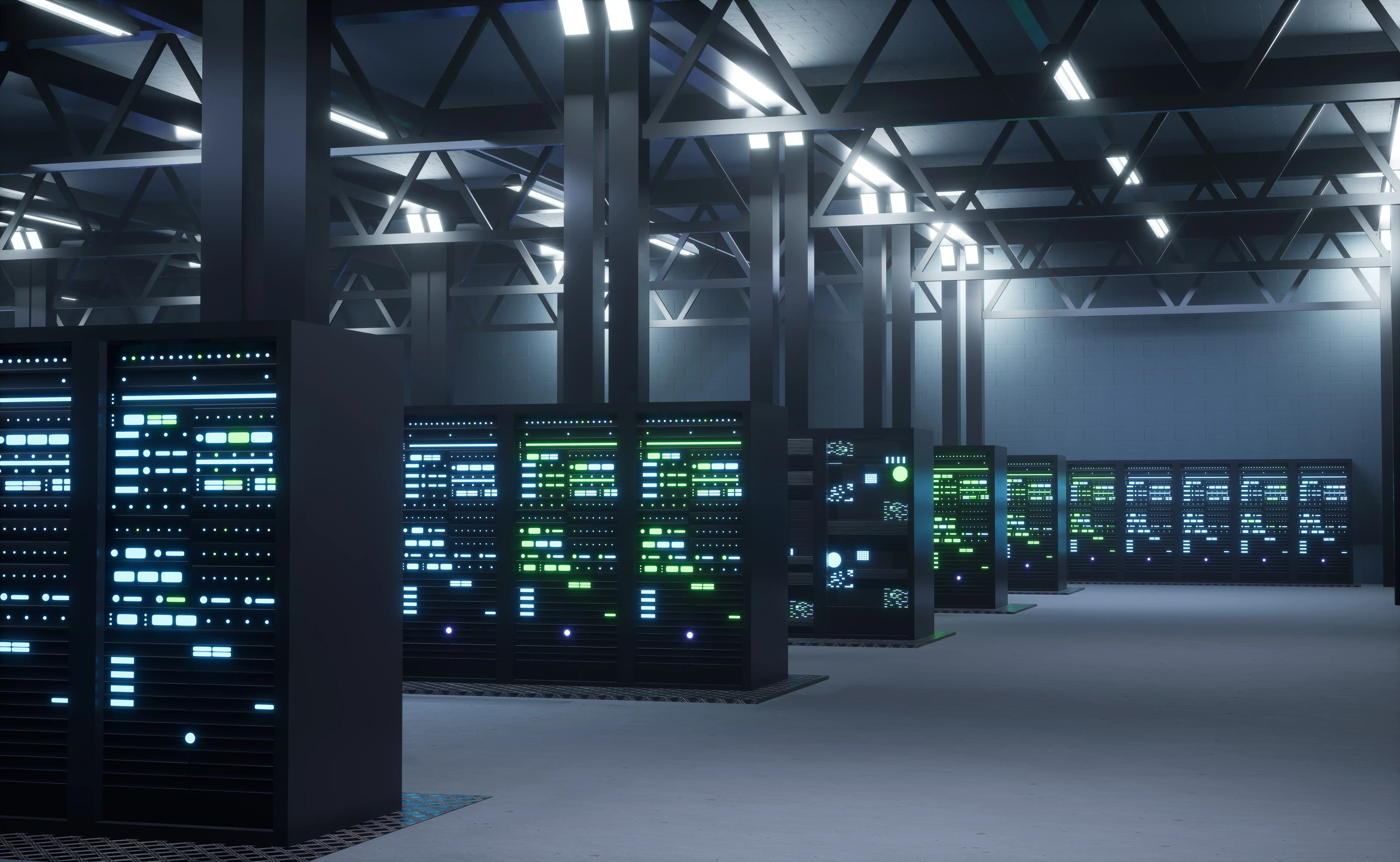
Behind every prompt, every question, every AI-powered application are the data centres that make it all possible, but as AI adoption continues to increase, so does the environmental impact of data centres, and with that, the need to make them more energy-efficient and environmentally-friendly.
The biggest challenge for data centres
AI keeps advancing and becoming more powerful, but that also means it is becoming incredibly demanding. Training large language models and running AI inference workloads requires processors that consume huge amounts of power.
And more power means more heat.
If that heat isn't removed efficiently, server performance suffers. Components can overheat, processors may need to reduce their performance, and cooling equipment has to work even harder to maintain safe operating temperatures.
As AI hardware becomes more powerful, cooling systems are consuming a greater share of a data centre's electricity, or require more water, making thermal management one of the most effective ways to improve energy efficiency and reduce carbon emissions.
Cooling in data centres
The electricity needed to power servers has an impact on the environment, and cooling those servers is a major contributor to that energy consumption. Every fan, pump, air conditioning unit, and liquid cooling system requires electricity. As server densities increase, cooling infrastructure must work even harder to remove the heat generated by increasingly powerful hardware (as well as greater water consumption with water cooling).
So, one of the best ways to reduce overall energy or water consumption is to create more efficient cooling systems. The more efficiently heat can be removed, the less energy is required to maintain optimal operating temperatures, the lower the carbon emissions and operating costs.
This is where custom aluminium extrusions come into the conversation, because aluminium profiles allow engineers to optimise cooling components, contributing to more efficient thermal management, while the material itself offers sustainability advantages.
Why custom aluminium extrusions are used in data centre cooling
Aluminium is already used throughout data centres for racking, enclosures, and cooling applications, but not every challenge—in this case, thermal management challenge—can be solved using standard, off-the-shelf components.
Different servers, processors, and liquid cooling systems all have unique thermal requirements. By using custom aluminium extrusions, engineers can develop cooling components specifically for each application, which allows bespoke aluminium profiles to be engineered for maximum thermal performance, while using only the material needed for the job. For example, by tailoring fin geometry, wall thickness, surface area, airflow paths, and structural features, heat dissipation can be improved without unnecessary material or weight.
So, rather than forcing engineers to design around standard sections, custom aluminium extrusions allow the profile itself to become part of the thermal management solution.
Why aluminium is such an effective material
While copper offers higher thermal conductivity, it is also significantly heavier and more expensive. Aluminium, on the other hand, provides an excellent balance between thermal performance, weight, cost, and manufacturability, often making it the preferred material for many cooling applications.
Its properties also make it particularly well suited for thermal management:
• Excellent thermal conductivity for efficient heat dissipation
• Lightweight construction that reduces overall system weight
• High corrosion resistance for long service life
• Outstanding extrudability, allowing complex cooling profiles to be manufactured efficiently
• Good strength/weight ratio for structural applications
• Compatibility with a wide range of machining and finishing processes
The sustainability of aluminium goes beyond recycling
We’re talking about sustainability, so naturally, the carbon footprint of the material itself needs to be considered, and aluminium is quite good with that.
Aluminium is recognised for being infinitely recyclable, but the sustainability benefits of custom aluminium extrusions go much further.
Firstly, since the profile is designed specifically for the application, engineers can place material only where it contributes to performance. This helps reduce unnecessary material usage without compromising strength or cooling efficiency.
Second, being lightweight reduces transportation emissions and simplifies installation, a very useful advantage which is often leveraged in construction, for example, using aluminium for bridge expansion joints. Third, aluminium's durability and corrosion resistance contribute to a longer service life, reducing the need for replacement components over time.
Finally, and perhaps most importantly, well-designed aluminium cooling components can improve thermal efficiency. Better thermal management allows cooling systems to operate more effectively, reducing the amount of energy required to keep the hardware within safe operating temperatures.
Aluminium alone won't solve the energy challenges facing data centres, but it is one of the materials helping engineers design cooling systems that are lighter, more efficient and environmentally-conscious, and better optimised for the demands of AI infrastructure.
If you're looking to manufacture bespoke aluminium profiles for cooling systems or other thermal management applications, get in touch with our team to discuss your aluminium profile project.
Follow us on LinkedIn to stay updated with our aluminium profile manufacturing insights.