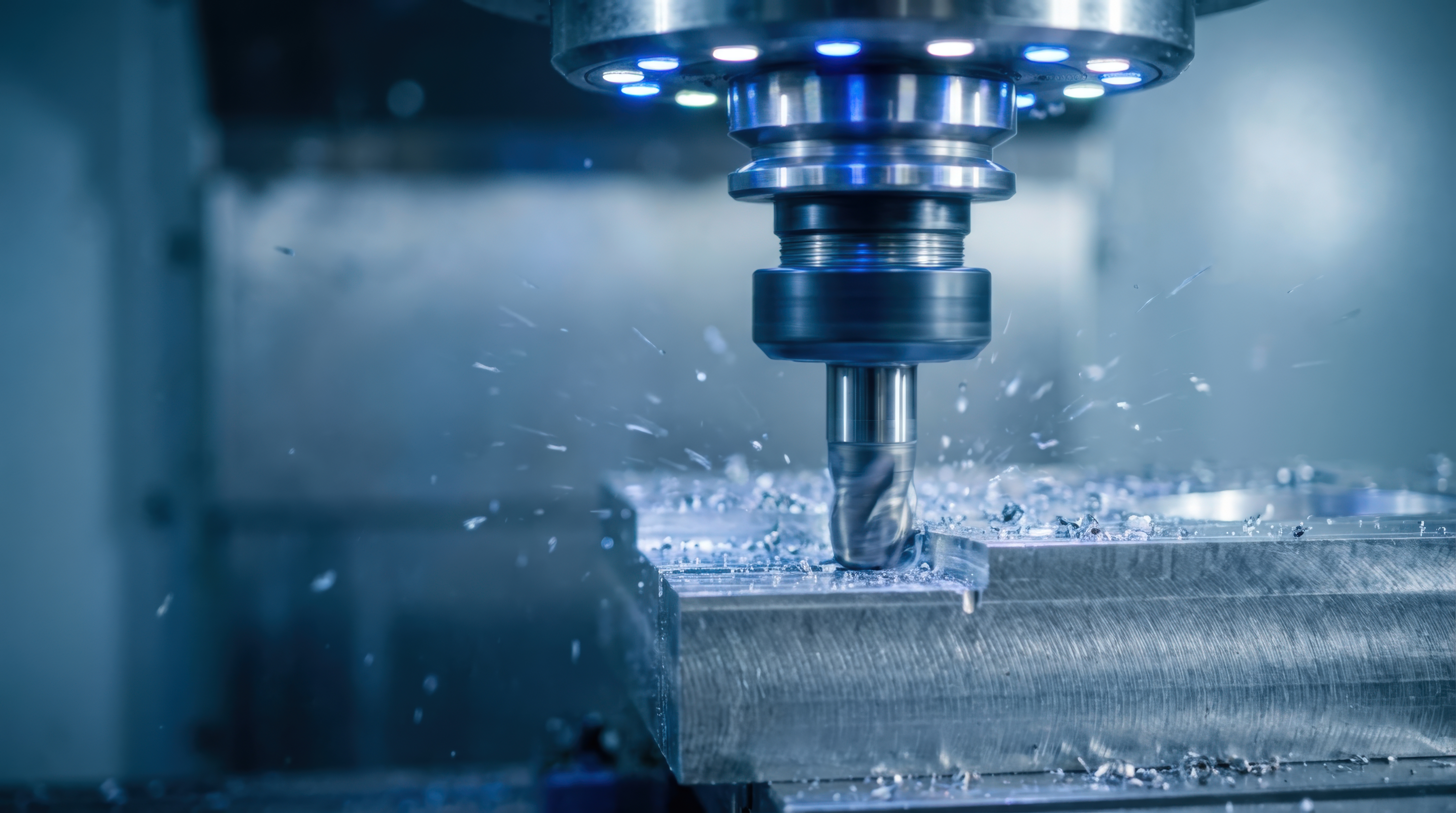
Your custom aluminium product requires threads, pockets, tight tolerance faces, counterbores, precision cuts, maybe even multi-axis features. You know it will move through multiple machining stages, you know cycle time will add up, and you know machining will be the main cost driver.
When you’re sourcing bespoke aluminium profiles which require extensive secondary operations, machining can quickly become the dominant cost driver. But there are ways to circumvent this cost.
So, how do you control cost when heavy custom aluminium machining is needed?
Can the aluminium profile be simplified?
This is usually the first internal discussion.
Sometimes the answer is yes. Design-for-manufacture reviews can identify areas where machining can be reduced, such as tolerances which are tighter than functionally necessary and trigger extra finishing passes or other operations.
And sometimes the answer is no. The complexity of the bespoke aluminium profile is there for a reason. This is often the case in medical, automation, electronics, or structural applications. The profile cannot be simplified without affecting performance.
When simplification isn’t realistic, the focus shifts from redesigning the part to optimising how it is produced.
Is it better to source a separate, specialised supplier in aluminium profile machining?
Supplier A extrudes the profile. Supplier B handles the machining. And maybe even supplier C for sub-assembly.
Because your profile requires high-manipulation machining, you opt for a specialist in aluminium profile machining to reduce the overall costs. Still, you take the hit in extra management and administrative coordination.
It would be easier if one supplier could produce it all. But your extruder cannot machine your aluminium profile at an efficient cost, or perhaps the machining centre cannot extrude.
The best option would be a supplier who manages the entire production process, with a machining process optimised for parts requiring a lot of secondary operations.
A machining-led production model
For bespoke aluminium profiles that will go through a lot of handling and manipulation at the machining stage, the more efficient structure is one where machining capability drives the production strategy from the beginning.
That means:
• The extrusion design is reviewed with downstream machining in mind.
• Profile geometry supports stable clamping.
• Critical surfaces are positioned to minimise repositioning.
• Material removal is reduced before machining even begins.
You want an aluminium machining centre where operations are sequenced deliberately to reduce handling and re-fixturing. Multi-step processes are consolidated where feasible. Dedicated fixtures are developed for repeat jobs. And even custom tooling to speed up the process, such as a purpose-built punch press tool to accelerate repetitive features while maintaining dimensional control.
And if your profile is to be part of a serial production, the positive effects quickly compound:
• Lower cycle time per part.
• Reduced scrap rates.
• Improved repeatability.
• More predictable delivery schedules.
It would be inaccurate to claim that more machining automatically reduces cost. However, the more extensive the secondary machining operations, the more important process optimisation becomes. In a production model not designed for complexity, heavy machining increases cost disproportionately. In a production model built specifically around custom aluminium machining with high-manipulation, complexity becomes structured and repeatable.
Why end-to-end aluminium profile manufacturing matters
When extrusion, machining aluminium profiles, surface finishing, and sub-assembly are managed within one coordinated structure, process alignment improves. The risks of non-conformity decrease, and so do your costs.
From a procurement perspective, fewer suppliers also mean fewer contracts to manage, fewer points of failure, and clearer accountability.
When machining expertise, integrated production management, and process optimisation are aligned, even heavily manipulated bespoke aluminium profiles can be produced in a controlled, cost-effective way.
What should you look for in a supplier?
If your part requires significant post-extrusion machining, ask:
• Is machining a core capability or an add-on service?
• Is extrusion reviewed with machining in mind?
• Does the aluminium machining centre use dedicated fixtures and custom tooling for repeat production?
• Is production managed by one supplier from design to delivery?
• Bonus: Can the supplier support finishing and sub-assemblies if required?
If you’re reviewing a project heavy on secondary machining with no way to simplify the part, and are concerned about cost escalation, the best option is a single supplier for the entire production built to handle complicated machining. And they do exist.
If your profile requires significant post-extrusion machining and you are looking for a streamlined, accountable supply solution, get in touch to discuss your project.
Follow us on LinkedIn to stay updated with our aluminium profile manufacturing insights.