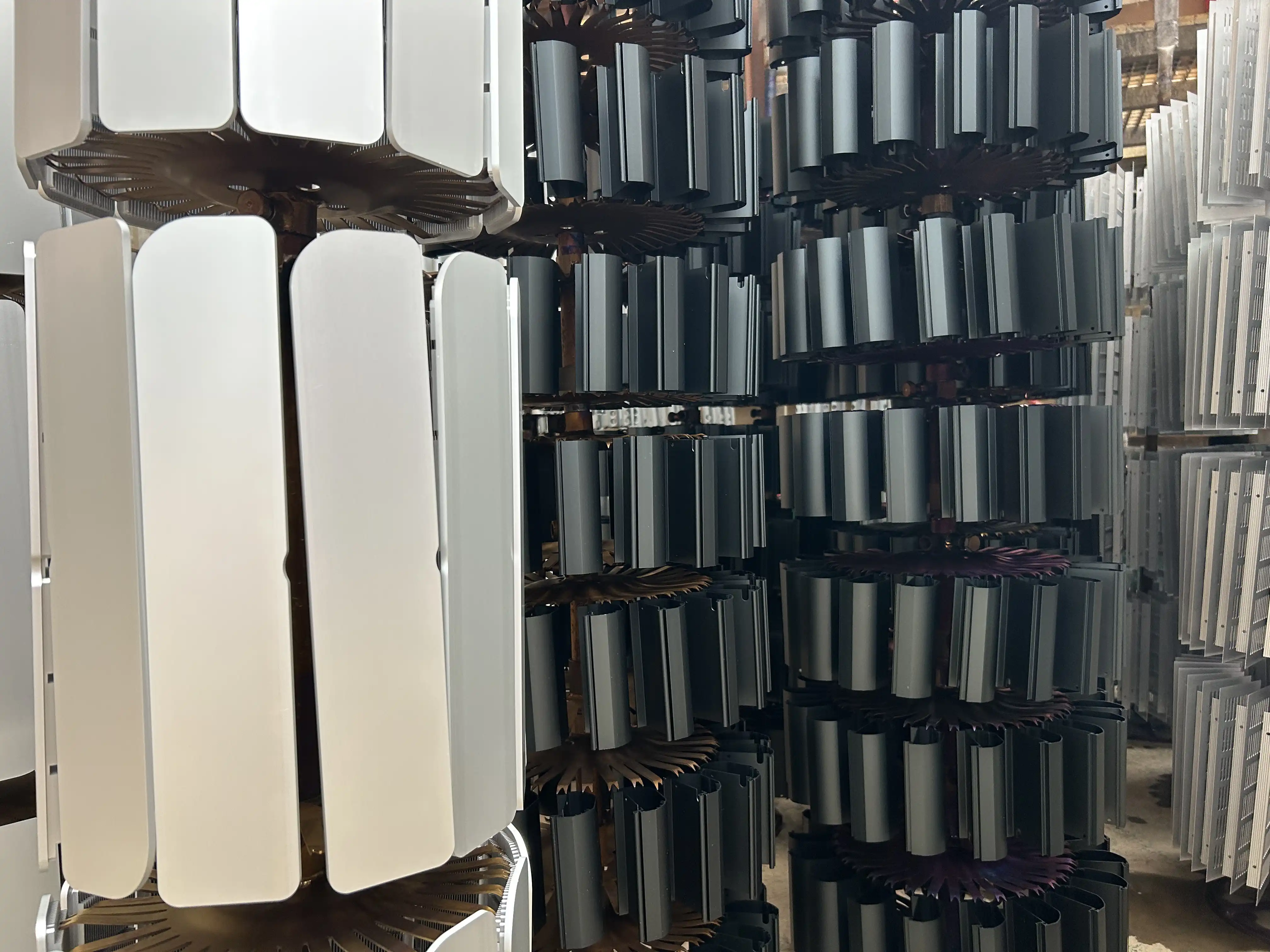
A common question in aluminium profile manufacturing is whether parts should be anodised before or after machining, because it has a huge impact on the final product.
So, when should you anodise before machining and when should you anodise after?
What happens when anodising aluminium
Let’s first get into what anodising does, because how aluminium anodisation works is the reason why you might need to anodise before or after machining.
Anodisation is a process that grows a protective oxide layer on the surface of aluminium (both inwards and outwards). Unlike paint or coating, it becomes part of the metal itself, so it won't peel or flake off. But it also means this thickness growth matters when machining because of tolerances, threads, and sliding surfaces.
Anodising aluminium before machining
After anodisation, the aluminium component is sealed, so when you machine after the aluminium has been anodised, you open that seal and expose unanodised aluminium.
Essentially, if you anodise first and machine later, the machined parts of your aluminium profile will not have the benefits that come from the anodisation process (corrosion resistance, surface hardness, aesthetics…). If raw aluminium in pockets or holes isn't a problem, then anodising before machining is best. It is also the better choice when tight final tolerances are important.
Anodising aluminium after machining
In many industries, unanodised aluminium is completely fine. In some industries working in, for example, medical, laboratory, or aerospace, environments, it usually isn’t, because exposed aluminium loses the protection from the anodisation—benefits which are needed even in holes and pockets.
So, if appearance, hygiene, corrosion resistance, wear performance, surface hardness, etc, across all surfaces are critical, you're probably best to anodise after machining.
And if you decide to anodise after machining your aluminium profile, there are a few design considerations to keep in mind to ensure predictable results.
Design tips for successful post-machining anodisation
Designing aluminium components with post-machining anodising in mind is ultimately about predictability. You need predictable coating thickness, predictable tolerances, visual consistency, etc. So, for smoother sailing, there are a few things to keep in mind:
• Allow for oxide growth in final dimensions: Anodising adds thickness inward and outward. For critical fits, specify whether tolerances apply before or after anodising and note the target coating thickness.
• Add small radii instead of sharp internal corners: Even a 0.2–0.5 mm radius improves coating uniformity, reduces thin spots, and prevents stress fractures in the oxide.
• Avoid deep, narrow features that anodise unevenly: Slots, blind holes, and long cavities restrict electrolyte flow. Use relief features where possible or note acceptable cosmetic variation on nonfunctional surfaces.
• Choose alloys that anodise consistently: 6060/6063 give the most uniform colour and surface finish. 6082 provides higher strength but can show slight colour variation—fine for structural but not ideal for cosmetic parts.
• Consider anodising fixturing early: Contact points won’t anodise. If surface appearance matters, define preferred gripping areas or add small nonfunctional tabs for handling.
What if you need to machine both before and after anodisation?
Not every project neatly fits into “anodise before machining” or “anodise after machining.”
Sometimes, a mix of both pre- and post-machining anodisation is required, like when you need to both anodise and tap your bespoke aluminium profile.
You don't anodise after tapping because the anodisation coating adds thickness and can push features out of tolerance. But, as we've often seen with the custom-made products we manufacture at ALUCAD, sometimes you need both, nonetheless. In that case, what we do is we machine all the other features, anodise the part, then re-machine afterwards to create the threads.
Another example of requiring a hyrbid approach is for functional contact surfaces, particularly in electrical applications. Anodising creates an electrically insulating oxide layer, which isn't always great for areas that need reliable conductivity. We've had the case where we machined the contact surface using a face milling operation to make it flat, clean, and free from contamination. This ensures consistent electrical contact while still benefiting from anodisation on the rest of the part for corrosion resistance and appearance.
The choice between pre- and post-machining anodisation depends on what your component must prioritise: precision, durability, appearance, electrical behaviour, cost… The key is deciding the sequence early on in the design, or it can mess up a lot of your intent.
If your project requires aluminium anodisating either pre- or post-machining, or perhaps a mix of the two, and you’re looking for a dependable partner at a sensible cost, get in touch with us.
Follow us on LinkedIn to stay updated with our aluminium profile manufacturing insights.